This resource provides accessible, reliable information on constitutional history and the roles and responsibilities involved in administering congressional elections in the United States, with the goal of advancing civic understanding among government officials, media, civic organizations, and the American public.
The Constitution outlines a deliberate framework for election administration, placing the responsibility for running elections with state and local officials. Congress retains limited authority to set national standards, and the President is not assigned a role in supervising election administration.
In three parts, this resource explains how primary responsibility for election administration rests with the states, why any federal authority belongs to Congress rather than the Executive Branch, and how current federal involvement operates through congressional statutes. It outlines the role of state and local officials within the system of election administration and identifies how this structure safeguards democratic accountability and the rule of law.
Kim Wyman is Washington’s former Secretary of State, serving from 2013 to 2021. She’s currently the Vice President of Government Affairs for Liberty Vote, a nonpartisan election technology company.
Shenna Bellows is the Secretary of State of Maine. Previously, she was the Executive Director of the American Civil Liberties Union of Maine and served two terms in the Maine Senate.
Trey Grayson is the former Secretary of State in Kentucky. During his time in office, he served as chair of the Republican Association of Secretaries of States and as president of the National Association of Secretaries of State.
Stephen Richer, Senior Practice Fellow in American Democracy, is the former elected Maricopa County Recorder, responsible for voter registration, early voting administration, and public recordings in Maricopa County, Arizona, the fourth largest county in the United States.
The views expressed in this article are those of the authors alone and do not necessarily represent the positions of the Ash Center or its affiliates.
Improving the Pipeline of Election Officials Strengthening Recruitment, Retention, and Professional Development in U.S. Election Administration
This paper by members of the Ash Center’s Executive Session on Elections and Election Administration, Tina Barton, Judd Choate, Ruth Greenwood, Elizabeth Linos, Veniece Miller and Tammy Patrick, presents a comprehensive pipeline strategy to recruit, support, and retain election administrators—by reducing barriers to entry, strengthening professional networks, improving workplace support and using workforce data to address burnout and prevent attrition.
How Americans Navigate Voting Information Ahead of the 2026 Midterm Elections
The Shorenstein Center’s 2026 Voting Information Trends project—developed in collaboration with the National Internet Observatory at Northeastern University, the Ash Center for Democratic Governance and Innovation’s Program on Democracy and the Informed Public, and The Civic Health and Institutions Project—provides new insights into the voter information landscape in the United States ahead of the 2026 midterm elections.
Among the resources, an interactive dashboard maps where Americans are finding voting information and learning about key aspects of the voting process—from sourcing polling locations to voter registration. Also included are a series of trends reports gauging perceptions of voting in the lead up to the 2026 midterm elections.
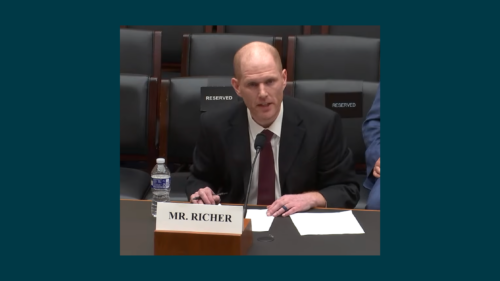
In Appearance Before Congress, Stephen Richer Testifies on Alleged Noncitizen Voting in New Jersey
On Tuesday, September 15, 2026, former Maricopa County Recorder Stephen Richer, now an Ash Senior Fellow and election administration expert, testified before the House Judiciary Subcommittee on Oversight. The hearing examined allegations that approximately 6,600 noncitizens were improperly registered to vote in New Jersey between June 2023 and June 2024.