Feature  

Reimagining Democracy 2026 Summer Reading List

Tova Wang, director of research projects in democratic practice at the Ash Center, shares her top picks for summer reads focused on making democracy more resilient, responsive, and inclusive.

A collage of book covers, podcasts, and reports from the Reimagining Democracy summer reading list.

If we want to fix our democracy, we have to look closely at how we connect with one another, whether that’s through structural reforms to our voting systems or the community we build at a sporting event. To help spark new ideas on how we participate in public life, the Reimagining Democracy Program’s Tova Wang shares a curated list of books, articles, reports, and podcasts to check out this summer.

Book

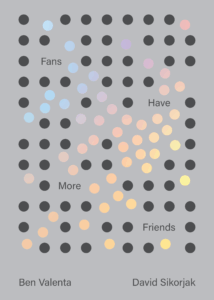
Fans Have More Friends

David Sikorjak and Ben Valenta

This book provides data and real examples of how sports build community, social connection, and increased trust in ways that benefit us individually and as a society. Reading this was transformative for me — everything that I had ever intuited about the power of sports had well-conducted research and data to back it up. It is a very enjoyable read for any sports fan.

Report

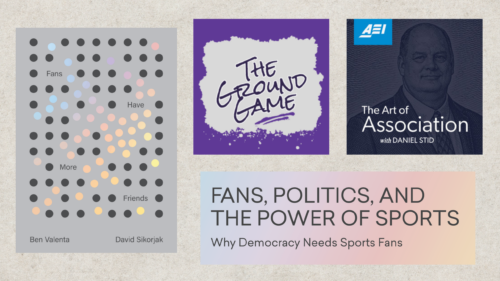
“Fans, Politics, and the Power of Sports: Why Democracy Needs Sports Fans”

More in Common

Following up on the work by Sikorjak and Valenta, the fantastic organization More in Common conducted a survey on how sports fans differ from casual or non-sports fans in their values and civic engagement. Without giving away too many spoilers, the report provides data showing how big sports fans vote more, are more willing to talk to people across political divides, and score higher on many other metrics of greater civic health and social bonds.

Article

“The Best Response to the Supreme Court’s Callais Ruling: Proportional Representation”

Guy-Uriel Charles, Michael Latner, and Luis Fuentes-Rohwer

Professor Guy-Uriel Charles at Harvard Law School has been a friend and colleague for over 20 years and is one of our nation’s most brilliant legal scholars on the Voting Rights Act, among other issues. In this piece, he explains his view of what should come next now that the Supreme Court has eviscerated this historic piece of legislation, pointing toward structural fixes like proportional representation. His new edited volume, “America Unfinished,” is also just days away from publication. I legitimately can’t wait.

Substacks

“The Art of Association”

Daniel Stid

Daniel Stid has been a leader in the democracy space for many years, currently serving as a fellow at the American Enterprise Institute. I find him to be one of the most thoughtful, insightful, and creative thinkers and writers on a range of topics, including the role of philanthropy in our democracy. He consistently gets me to think about things in a new way, broadening my perspective and understanding. And now he has a podcast, too!

“The Ground Game”

Dakota Hall

Dakota Hall is one of our most thoughtful leaders when it comes to youth attitudes, behavior, and voter engagement. Read this newsletter for a substantive and nuanced understanding of Gen Z politics in 2026 and beyond.


Tova Wang is the Director of Research Projects in Democratic Practice at the Ash Center. A longtime leader in election reform and increasing political participation among marginalized groups, she previously directed policy and research at the Center for Secure and Modern Elections and authored The Politics of Voter Suppression.


The views expressed in this article are those of the author alone and do not necessarily represent the positions of the Ash Center or its affiliates.

Related Resources

A More Perfect Union: Marcus Board Jr. On Bridging Practice and Scholarship
Marcus Board Jr. on Harvard University's campus.

Feature

A More Perfect Union: Marcus Board Jr. On Bridging Practice and Scholarship

For Marcus Board Jr., democracy has never been just an academic subject—it has always been about people. As a 2025-2027 Democracy Visiting Fellow at the Ash Center for Democratic Governance and Innovation at Harvard Kennedy School, the Howard University political scientist explores how scholarship and community practice can work together to strengthen democracy.  

In this conversation, Board reflects on the experiences, ideas and relationships that have shaped his work.

Terms of Engagement—Kakistocracy, Populism, and Elites in American Politics

Podcast

Terms of Engagement—Kakistocracy, Populism, and Elites in American Politics

Richard Hanania, a writer and former alt-right influencer who renounced MAGA and now favors political rule by elites, joins Terms of Engagement to discuss his book “Kakistocracy: Why Populism Ends in Disaster.” The book is named for the Greek word meaning “rule by the worst.”

Terms of Engagement Summer Reading List
A collage of book and report recommendations from the Terms of Engagement summer reading list.

Feature

Terms of Engagement Summer Reading List

Books, reports, and articles exploring the front lines of American politics and democracy, as featured on the Terms of Engagement podcast.

More on this Issue

Terms of Engagement Summer Reading List
A collage of book and report recommendations from the Terms of Engagement summer reading list.

Feature

Terms of Engagement Summer Reading List

Books, reports, and articles exploring the front lines of American politics and democracy, as featured on the Terms of Engagement podcast.

What Boston’s World Cup Summer Showed Us About Sports and Civic Life

Commentary

What Boston’s World Cup Summer Showed Us About Sports and Civic Life

Thanks to the World Cup, Boston had an unforgettable summer. In this commentary, the Ash Center’s Tova Wang and former New England Patriots executive Scott Pioli break down how the city can harness that energy to build stronger communities and transform local sports culture year-round.

Surveying Sportsmanship as a Framework for Civility
A red and blue graphic with versus in the middle at a sports stadium.

Q+A

Surveying Sportsmanship as a Framework for Civility

Sports may seem far removed from the challenges facing American democracy, but both rely on a shared commitment to rules, competition, and respect for opponents. As political polarization deepens, some scholars are looking beyond traditional civic institutions and asking whether the values that govern athletics can help strengthen democratic life. New research from the Ronald Reagan Center on Civility and Democracy suggests the answer may be yes.