Developing and enforcing conflict of interest policies is no simple task for anti-corruption advocates and ethics officials alike. Archon Fung and Dennis Thompson help to better understand the problem and examine when risk is underestimated and when it is overestimated.
The federal government’s vast ethics bureaucracy, led by the Office of Government Ethics, is charged with ferreting out and controlling conflicts of interest amongst millions of federal civil servants, political appointees, and contractors. Yet by most indicators, such conflicts remain embedded among the nearly three million-strong federal workforce.
Conflict of interest allegations leveled against presidents, Supreme Court justices, and congressional leaders continue to demonstrate the challenges to stamping out the perception that public officials are unduly influenced, according to Archon Fung and Dennis Thompson, writing in a recent article published in the journal Governance. “Conflicts of interest compromise not just integrity and competence but democracy itself,” they write. “Democratic processes importantly determine the public interest. Democracy requires officials to exercise their judgment to advance that public interest.”
As conflicts of interest take even larger public and political prominence, Fung and Thompson lay out misconceptions and mistakes they argue often underplay the risks of such conflict. The pair cite what they term the “honesty claim,” that those who may have a conflict of interest are inherently honest in their intentions, conflicts aside, as one such misconception. As an example, they reference claims made by allies of former President Donald Trump that his intermingling of official and private business interests while he was in the White House was of no consequence because of his underlying integrity and honesty.
In a similar vein, Fung and Thompson point to “motive denial” as another attempt to deflect charges of conflict of interest. They reference allegations that Hillary Clinton conducted her official duties as Secretary of State while also participating in meetings regarding her own family foundation, which had previously received donations from foreign governments.
Clinton, when pressed about potential conflicts raised by her work with the foundation, responded that she had always been honest in her dealings and was guided by her work on behalf of the American people as secretary of state. But according to Fung and Thompson’s framework, Clinton’s honesty defense doesn’t clear the bar. “[O]fficials may deceive themselves about their motives. But the motive denial asks even more of the public than the honesty defense.”
While disclosure can be a useful corrective, it will often be insufficient.
Archon Fung and Dennis Thompson
Authors, Conflict of interest in government: Avoiding ethical and conceptual mistakes
Transparency, an increasingly used remedy to help address conflicts of interest in government, is often lauded by reformers as a means for citizens to better hold public officials accountable. Yet it is too often held out as a panacea for addressing conflicts of interest. “While disclosure can be a useful corrective, it will often be insufficient,” Fung and Thompson write. Transparency information, “may be publicly available but unnoticed,” they write. “Electoral security may shield officials from corrective pressure; and officials may respond by deceiving rather than rectifying.”
Yet, the pair argue that mistakes can even overplay the risks of conflict. “They [overzealous policies] can have the effect of discrediting legitimate regulation and provoke backlash against concerns about conflict of interest. The pair point to the recent story of an educational economist barred from working on federal student loan policy because she, like tens of millions of other Americans, had outstanding student loan debt. They argue that overly cumbersome rules enacted in response to certain perceived conflicts could discourage capable individuals from entering public service.
Ultimately, Fung and Thompson argue, understanding these mistakes and misconceptions about conflicts of interest is important for maintaining citizen trust in government. “Conflict of interest is a chronic condition that needs to be correctly identified and effectively managed. That is more likely when officials and citizens avoid the mistakes we have described above.”
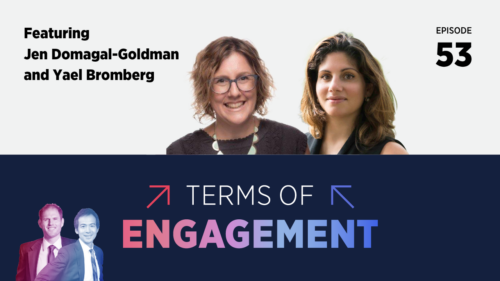
Terms of Engagement – The Fight for the Student Vote: Campus Democracy Under Pressure
Jen Domagal-Goldman, the executive director of the ALL IN Campus Democracy Challenge, and Yael Bromberg, a constitutional rights attorney and leading scholar on the Twenty-Sixth Amendment, join Terms of Engagement to explore what’s at stake in the ongoing partisan battle over student voting rights and civic participation.
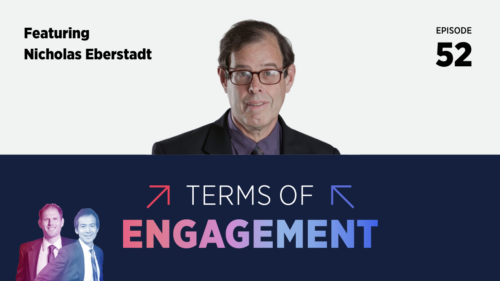
Terms of Engagement – Men Without Work: Is a Hidden Trend Fueling American Populism?
American Enterprise Institute political economist Nicholas Eberstadt joints Terms of Engagement hosts Archon Fung and Stephen Richer to discuss falling male labor force participation and what he says are its effects on politics and society.
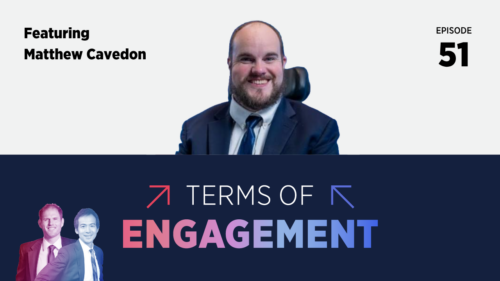
Terms of Engagement – Flock Cameras, Privacy, and Democracy in the New Surveillance State
Attorney and criminal justice researcher Matthew Cavedon joins Terms of Engagement hosts Archon Fung and Stephen Richer to discuss the democratic and legal implications of Flock cameras.
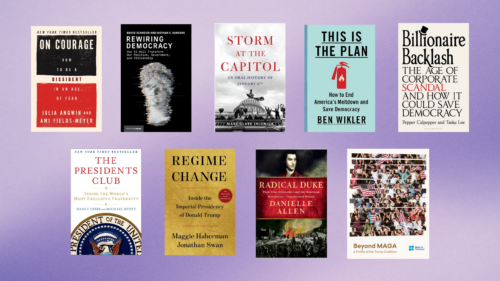
Tova Wang, director of research projects in democratic practice at the Ash Center, shares her top picks for summer reads focused on making democracy more resilient, responsive, and inclusive.
Allen Lab Fellow Spotlight: City Charters Are Deliberative Democracy’s Friends
Allen Lab Fellow Tyler Fisher examines the untapped potential of city charters as a vehicle for deliberative democracy, arguing that advocates should work to embed tools like citizen assemblies, participatory budgeting, and town meetings directly into the governing architecture of cities, institutionalizing deliberative democracy one municipality at a time.