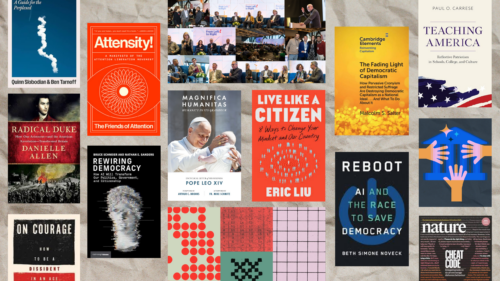
The resources below take stock of this historic moment—from civic culture to political economy to the rapid changes in technology which influence the everyday infrastructure of democracy—and ask what is possible. The books, articles, courses and videos below help us make sense of the past, present, and future possibilities for renovating democracy at 250.
Our constitutional democracy is like an old house—built by others, inherited by us, shaping our future possibilities. The challenge of democracy renovation is to understand which parts of the structure remain strong, which need repair, and where new rooms—or even new floor plans—are needed. Not only that but technology has transformed what is possible for how we build—as well as introducing major new challenges for shared flourishing. Democracy renovation is about designing for a future that is still under human and democratic control."
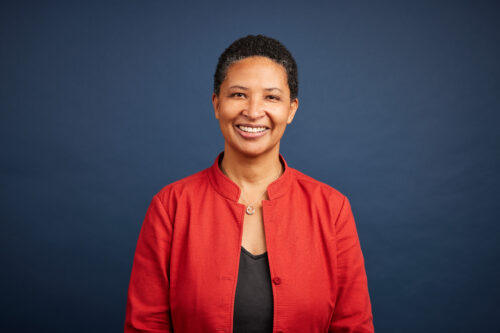
Danielle Allen
Professor of Public Policy, James Bryant Conant University Professor
Allen reveals that the Age of Revolution began earlier than we thought in Britain itself. She has uncovered the little-known story of a reform-minded British aristocrat who shaped his nation’s path in turbulent times, and whose friendship with Thomas Paine turned to bitter rivalry.
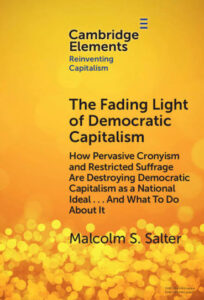
Salter reflects on how pervasive cronyism and restricted suffrage are destroying democratic capitalism. Drawing on Allen’s principles of political equality, reciprocity, and power sharing, he lays out practical steps for how to make economic and political markets more democratic.
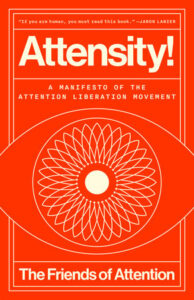
The authors push back against the commodification of human attention that is detrimental to both our humanity and the foundations of our democracy. Allen calls it a “…declaration of independence from tech’s tyranny over our human spirits.”
InnovateUS, the Allen Lab for Democracy Renovation, and The GovLab (Course)
This open, self-paced course is designed to equip public servants with the skills to learn from meaningful engagement with communities, and how artificial intelligence can responsibly support the process.
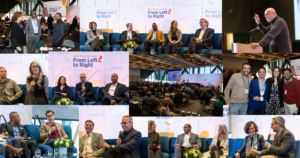
The After Neoliberalism: From Left to Right conference, hosted by the Allen Lab for Democracy Renovation, convened leading thinkers across the political spectrum to explore and debate emerging visions for the future of the political economy.
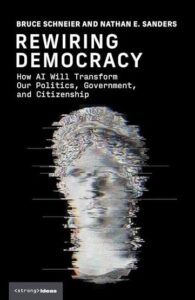
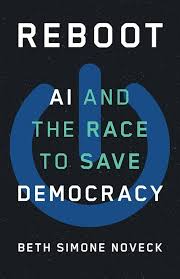
Schneier and Sanders survey how AI will reshape our democracy, from campaigns to lawmaking, and how we can steer it toward more participatory and democratic ends.
In this Nature Human Behaviour article, several Allen Lab GETTING-Plurality Research Network members contribute to mapping out how advanced AI systems could destabilize or support the mechanisms on which democracy is based.
Leading artificial intelligence companies, OpenAI and Anthropic, propose how frontier AI systems should be governed. These proposals illustrate different ideas and federal frameworks at a tumultuous moment for national AI policy.
Previous reading lists from the Allen Lab for Democracy Renovation:
Sarah Hubbard is the Associate Director for Technology & Democracy at the Allen Lab for Democracy Renovation at Harvard Kennedy School’s Ash Center for Democratic Governance and Innovation. Her research focuses on the intersection of artificial intelligence, democracy, and civic life.
The views expressed in this article are those of the author(s) alone and do not necessarily represent the positions of the Ash Center or its affiliates.
Democracy 250: Myth, Memory, and the American Story
As the United States approaches its 250th anniversary, questions about the nation’s history — and whose stories shape its meaning — have renewed significance. Moderated by journalist and political commentator Eugene Scott, a recent panel discussion explored how Americans’ understanding of the past informs national identity, perceptions of democracy, and civic engagement.
Self-Evident Truths: The 250-Year Pursuit of Human Rights in the United States of America
Published as the nation celebrates its 250th anniversary, the Carr-Ryan Center for Human Rights’ essay collection “Self-Evident Truths” gathers faculty and fellows across Harvard’s schools including the Ash Center for Democratic Governance and Innovation, to examine how well America has fulfilled its promise that all people are created equal and endowed with inalienable rights.
The included essays span democracy, technology, public health, immigration, climate, and more, providing a nuanced look at what is required to fully realize the nation’s founding ideals today.
Navigating Democracy’s Next Chapter at the “Founding Futures” Conference
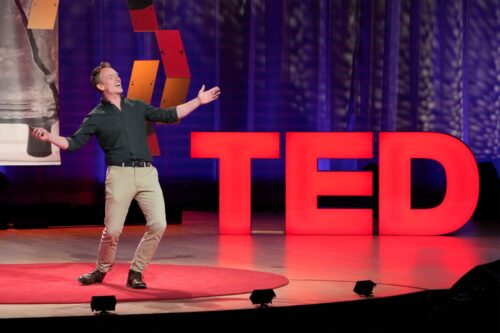
Ash Center Fellow Jon Alexander joined a diverse group of speakers at TED Democracy Philadelphia to share bold ideas for revitalizing modern democracy.