People waiting to vote in line at voting booths.

Voting and Elections

Free and fair elections are the foundation of a healthy democracy.

The Ash Center brings together research, events, and expert analysis on voting, election administration, civic participation, and the institutions that help ensure elections are accessible, secure, and trusted.


Filter by

  • Format

Filters

Close

Filters

Format

Should voting be a right or a requirement?
Vote Here placard at polling station

Video

Should voting be a right or a requirement?

Harvard Ash Center Senior Practice Fellow in American Democracy Miles Rapoport advocates that universal voting, a requirement that every citizen cast a ballot, could reduce polarization and pave a pathway to a more equitable American democracy.

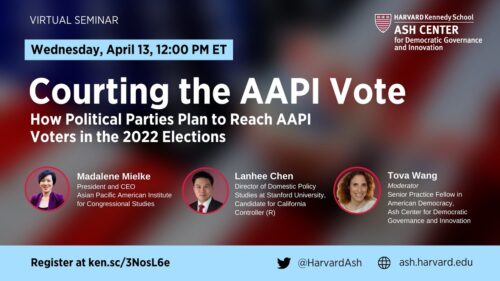
Courting the AAPI Vote: How Political Parties Plan to Reach AAPI Voters in the 2022 Elections
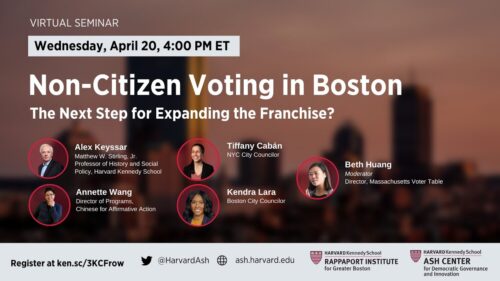
photo of the event details

Video

Courting the AAPI Vote: How Political Parties Plan to Reach AAPI Voters in the 2022 Elections

The 2020 election saw a dramatic increase in Asian American Pacific Islander (AAPI) voter participation—increasing ten percentage points over 2016. In the runup to the 2022 midterm elections, how will political parties continue to court AAPI voters? What strategies work to reach the growing AAPI community?

The future of the filibuster and voting rights in Congress
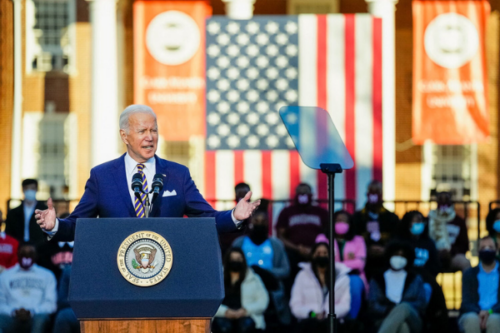
President Joe Biden speaking at a podium

Q+A

The future of the filibuster and voting rights in Congress

To discuss the filibuster and its impact on voting rights and the Senate, we sat down with Archon Fung, Winthrop Laflin McCormack Professor of Citizenship and Democracy at Harvard Kennedy School and the director of the Ash Center for Democratic Governance and Innovation’s Democratic Governance Program.

Two Americas Emerging: Voting Rights in the States

Video

Two Americas Emerging: Voting Rights in the States

In the nearly one year since the November 2020 elections, the diverging directions state legislatures took on expanding or contracting voting rights created a huge fault line in American democracy, described by some as ‘two Americas’. A Voting Rights Lab tracking report as of September 13, 2021, identified 27 states representing 70 million voters that had passed laws to expand voting opportunities, and 13 states with 55 million people that had passed sharply restrictive legislation. And state legislatures were still at work. What’s causing this divergence?

How are voting rights advocates advancing their work in such disparate political environments? What does it mean for upcoming elections and the future of American democracy? Join the Ash Center as voting advocates from two key states that have gone in opposite directions and policy experts evaluated the trends, discussed the present, and looked into the future.

Speakers include:

  • Mimi Marziani, President and CEO Texas civil rights project
  • Henal Patel, Director of the Democracy & Justice Program, New Jersey Institute of Social Justice
  • Randy Perez, Program Director, Voting Rights Lab
  • Jake Grumbach, Assistant Professor of Political Science at the University of Washington
  • Miles Rapoport, Ash Center Senior Practice Fellow in American Democracy, Moderator

Voting Rights and Democracy Reform in the States and on the Hill

Video

Voting Rights and Democracy Reform in the States and on the Hill

The Ash Center for Democratic Governance and Innovation convened advocates from the states and Capitol Hill to discuss what is at stake and the strategies being used in the fight for voting rights and democracy reform.

Voting Rights Battle Enters a New Round
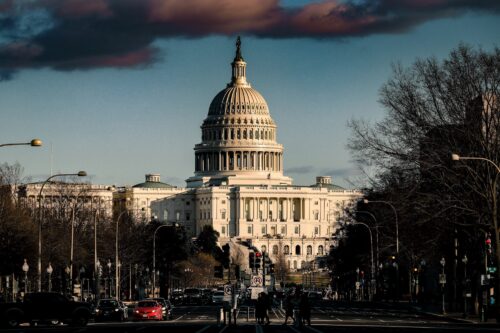
Photo of the Capitol building

Commentary

Voting Rights Battle Enters a New Round

On March 1, the Georgia House of Representatives passed H.B.531, a sweeping elections bill that critics and voting rights advocates were quick to note increases restrictions on absentee voting and curtails weekend early voting hours.

Voting in the Extraordinary 2020 Elections: What Worked for Voters, What Didn’t?

Video

Voting in the Extraordinary 2020 Elections: What Worked for Voters, What Didn’t?

The 2020 elections were a dramatic interplay of major procedural changes brought about as a result of COVID-19, multiple attempts to limit and discourage voting and a strong pushback against them, and extraordinary efforts to mobilize citizens to vote.

Mobilizing the Environmental Vote

Video

Mobilizing the Environmental Vote

Will environmentalists vote in November? Environmentalists aren’t voting as much as they ought to, but recent advances in data analytics and behavioral science offer hope for 2020 and beyond.