The Allen Lab for Democracy Renovation’s Technology and Democracy workstream aims to ensure that emerging technologies are developed and governed in support of the public benefit.
The Allen Lab for Democracy Renovation’s Technology and Democracy workstream is focused on developing democracy-supportive technology policies, harnessing the opportunities for emerging technologies to improve governance, fostering professional norms that lead to technology development supportive of human pluralism, and building a robust pipeline of experts who can bridge ethical and technical considerations within policy and industry spaces. We pursue this work through foundational analysis and theory, field-building, and policy development.
The Landscape of Digital Civic Infrastructure in Massachusetts
Allen Lab for Democracy Renovation authors offer the first comprehensive analysis of how Massachusetts municipalities are using technology to support civic engagement, government decision-making, and public service delivery.
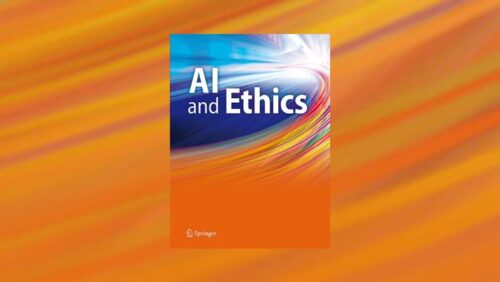
Crocodile tears: Can the ethical-moral intelligence of AI models be trusted?
Allen Lab authors Sarah Hubbard, David Kidd, and Andrei Stupu introduce an ethical-moral intelligence framework for evaluating AI models across dimensions of moral expertise, sensitivity, coherence, and transparency in their recently published paper, Crocodile Tears: Can the Ethical-Moral Intelligence of AI Models Be Trusted? in Springer AI & Ethics.
Earlier this year, the Allen Lab for Democracy Renovation hosted a convening on the Political Economy of AI. This collection of essays from leading scholars and experts raise critical questions surrounding power, governance, and democracy as they consider how technology can better serve the public interest.
This policy primer from the Allen Lab for Democracy Renovation is intended to introduce the ideas and conversations around how public AI alternatives could foster an ecosystem that prioritizes the public interest while offering a counterbalance to corporate concentration.
This policy primer from the Allen Lab for Democracy Renovation is intended to introduce the ideas and conversations around reform of Section 230 of the Communications Decency Act and how it could remake the social media ecosystem.
A Roadmap for Governing AI: Technology Governance and Power-Sharing Liberalism
This paper aims to provide a roadmap for governing AI. In contrast to the reigning paradigms, we argue that AI governance should be not merely a reactive, punitive, status-quo-defending enterprise, but rather the expression of an expansive, proactive vision for technology—to advance human flourishing.
GETTING-Plurality Research Network
At the center of our work is our multidisciplinary research network. The Governance of Emerging Technology and Tech Innovations for Next-Gen Governance (GETTING-Plurality) is a research network linking philosophers, social scientists, computer scientists, legal scholars, and technologists. This unique collaborative unites tech ethics initiatives at Harvard University with external impact partners across higher education and the tech industry, bringing philosophers and ethicists to the table for every project.
Our network seeks to advance understanding of how to shape, guide, govern, and deploy technological development in support of democracy, collective intelligence, and other public goods. Our focus is on how to do so, given the plural nature of human intelligence. We connect theory with practice to ensure that academic insights inform real-world policy and industry standards.
A Roadmap for Governing AI: Technology Governance and Power-Sharing Liberalism
This paper aims to provide a roadmap for governing AI. In contrast to the reigning paradigms, we argue that AI governance should be not merely a reactive, punitive, status-quo-defending enterprise, but rather the expression of an expansive, proactive vision for technology—to advance human flourishing.
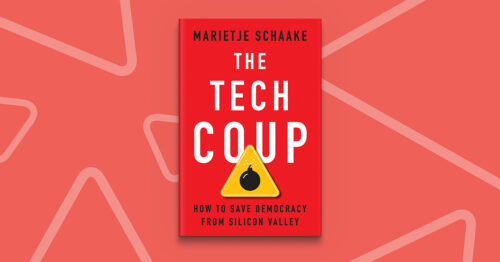
The Tech Coup: How to Save Democracy from Silicon Valley
The Ash Center hosted an online book talk with author Marietje Schaake and discussant Bruce Schneier on Schaake’s latest work, The Tech Coup: How to Save Democracy from Silicon Valley. The discussion was moderated by Danielle Allen, James Bryant Conant University Professor and Director of the Allen Lab for Democracy Renovation.
The year 2024 was dubbed “the largest election year in global history” with half the world’s population voting in national elections. Earlier this year, we hosted an event on AI and the 2024 Elections where scholars spoke about the potential influence of artificial intelligence on the election cycle– from misinformation to threats on election infrastructure. This webinar offered a reflection and exploration of the impacts of technology on the 2024 election landscape.
Earlier this year, the Allen Lab for Democracy Renovation hosted a convening on the Political Economy of AI. This collection of essays from leading scholars and experts raise critical questions surrounding power, governance, and democracy as they consider how technology can better serve the public interest.
As a part of the Allen Lab’s Political Economy of AI Essay Collection, David Gray Widder and Mar Hicks draw on the history of tech hype cycles to warn against the harmful effects of the current generative AI bubble.
As a part of the Allen Lab’s Political Economy of AI Essay Collection, Emily S Lin and Marshall Ganz call on us to reckon with how humans create, exercise, and structure power, in hopes of meeting our current technological moment in a way that aligns with our values.
AI, Digital Sovereignty, and the EU’s Path Forward: A Case for Mission-Oriented Industrial Policy
As a part of the Allen Lab’s Political Economy of AI Essay Collection, Tessel van Oirsouw explores how the EU should pursue “mission-oriented industrial policy” to align its technological development with its cross-sector strategic objectives.
Medicare Advantage as Asset Management: The Pretense of Care Under Logics of Extraction
As a part of the Allen Lab’s Political Economy of AI Essay Collection, Ajeet Singh explores how AI technologies deployed in the health care sector often orient towards the extraction of greater surplus revenues at the expense of patient health.
As a part of the Allen Lab’s Political Economy of AI Essay Collection, Sarah Hubbard explores alternative ownership and governance structures for artificial intelligence that may better serve the public interest.
Sunset and Renew: Section 230 Should Protect Human Speech, Not Algorithmic Virality
Allen Lab for Democracy Renovation Senior Fellow Allison Stanger, in collaboration with Jaron Lanier and Audrey Tang, advocate for a “repeal and renew” approach to Section 230 in an effort to reform the current social media ecosystem.
Allen Lab for Democracy Renovation Fellow Ami Fields-Meyer lays out research questions for developing a new U.S. tech policy agenda that puts people first.
Allen Lab for Democracy Renovation Fellow Alex Pascal and Vanderbilt Law Professor Ganesh Sitaraman make the case that public options for AI and public utility-style regulation of AI will enhance national security by ensuring innovation and competition, preventing abuses of power and conflicts of interest, and advancing public interest and national security goals.
Building a Digital Democracy with Audrey Tang and Megan Smith
The “Building a Digital Democracy” panel brought together Audrey Tang, Megan Smith, Professor Danielle Allen, and Professor Mathias Risse for a conversation on how technology is being used to transform our political institutions.