COVID-19 and the 2020 wave of racial justice demonstrations in the United States moved many healthcare organizations to enact antiracist change goals. Yet, many of these commitments lacked effective strategies and accountability mechanisms.
IARA conducted a one-year study of existing antiracist interventions in healthcare organizations and a review of authoritative evidence for institutional accountability.
Key Findings:
IARA’s pioneering case studies indicate five key organizational levers necessary to close racial disparities in healthcare outcomes and produce long-term sustainable institutional transformation:
Buy-in and continued engagement from leadership
A shared understanding and use of explicit language to define structural racism
Effective organizational infrastructure
Clearly defined metrics
Building internal capacity and professional development
Global Justice, Truth-telling and Healing Symposium Proceedings
The insights and feedback gathered at the event will guide IARA’s forthcoming report, which aspires to catalyze ongoing policy, advocacy, and community-based efforts for social change.
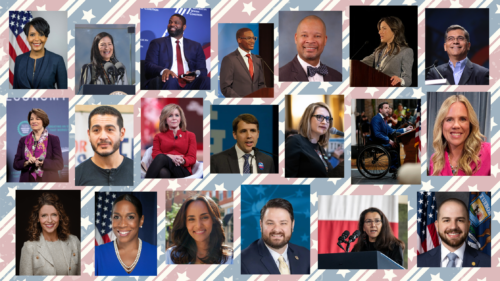
Election night 2026 produced a remarkable roll call of historic firsts. From the first Black woman elected governor of a U.S. state to the first Muslim elected to the Senate, voters broke barriers across state and party lines.
Contesting Repression in Divided Democracies: Can Counternarratives Reduce Support for Police Violence?
A new article in the American Journal of Political Science, co-authored by Yanilda María González, Ford Foundation Associate Professor of Public Policy and Ash Center affiliate, examines public attitudes toward police violence in Brazil. The authors find that while police discourse can increase public endorsement of violence, counternarratives from marginalized victims can be effective in reducing citizen support for repressive policing.
Bootstrap Blackness: Black Men, Conservatism, and Party Politics
A new research article by Dr. Christine Slaughter, Research Fellow at the Allen Lab for Democracy Renovation and co-authors examines the narrative of black men’s political “shift right”. The study finds Black men remain overwhelmingly Democratic, despite growing public attention to ideological divides.