Celebrities Strengthening Our Culture of Democracy
This study provides an analysis and evaluation of how celebrity engagement impacts civic participation in the United States. When and why do celebrities decide to use their influence to encourage civic engagement? What difference do their actions make?
A healthy democracy can be measured in many ways, with a core marker being the level of engagement in the process of electing public representatives. Unfortunately, despite record-breaking voter participation levels in recent elections, the United States still ranks 31st out of 50 developed nations in terms of eligible voter participation. Lagging voter engagement and rising distrust of political institutions weaken our democracy.
Today, many celebrities are involved in efforts to help boost civic interest, engagement, and participation while building goodwill with their fans. Celebrities, defined broadly as famous people, are distinctively positioned to tackle this critical issue because of their ability to garner media coverage, attract large crowds, reach their fans, and influence society.
This study focuses specifically on what celebrities are doing and can do, to promote voter participation, including voter education and mobilization efforts. However imperfectly, the impact of these efforts can be measured by examining whether they lead people to take actions related to voting, such as registering to vote, requesting a ballot, and casting a ballot.
High voter turnout is often celebrated as a sign of a healthy democracy, with election officials viewing strong participation as evidence of public engagement and political legitimacy. On Terms of Engagement, Professor Jason Brennan joins cohosts Archon Fung and Stephen Richer to examine whether higher turnout actually strengthens democracy.
We Surveyed 50,674 Americans. This Is What Brings Them Together.
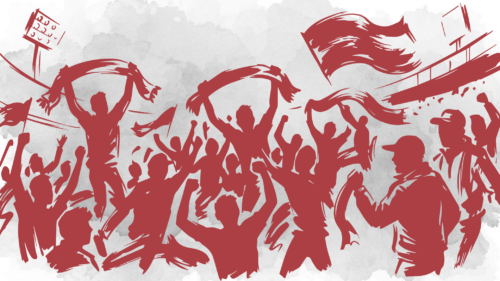
In this opinion piece, Audrey Feldman, Todd Rogers and Ben Valenta, participants in the Sports, Democracy and Civic Health project, describe their findings showing that shared fandom can soften partisan animosity and make political opponents more willing to connect.
Allen Lab launches new Digital Civic Infrastructure Initiative to help governments strengthen democracy through technology
The new initiative combines municipal partnerships, digital tools, and research to help communities improve transparency, civic participation, and public service delivery.
Allen Lab Fellow Spotlight: City Charters Are Deliberative Democracy’s Friends
Allen Lab Fellow Tyler Fisher examines the untapped potential of city charters as a vehicle for deliberative democracy, arguing that advocates should work to embed tools like citizen assemblies, participatory budgeting, and town meetings directly into the governing architecture of cities, institutionalizing deliberative democracy one municipality at a time.