


Additional Resource
How A.I. Can Be Good For Democracy
In a recent guest essay for The New York Times, Allen Lab Democracy Stack Fellow Beth Noveck argues for putting A.I. behind every public servant.

Commentary
Engaged California is the nation’s first state-run deliberation program, and a new law aims to make it last.
In January 2025, the Eaton and Palisades fires burned through the Los Angeles suburbs of Altadena and Pacific Palisades. By mid-February, fires across the Los Angeles metropolitan area had destroyed roughly 16,000 structures and killed 29 people. With years of rebuilding suddenly on the horizon, thousands of residents now had a uniquely direct stake in their government’s next steps.
Engaged California, the nation’s first state-run deliberative program, helped respond to the moment.
The program was born into a world in which fewer than one in four Americans vote in local mayoral elections, and only 9 percent attend local public meetings. Surveys consistently show that Americans want a voice in their democracy but feel the system is inaccessible and unimpactful, something researchers call the “participation paradox.”
Engaged California, launched by the state’s Office of Data and Innovation (ODI) in February 2025, was built to take on this crisis of civic engagement head on. The program’s first pilot followed the fires, with the goal of helping residents shape policy from beginning to end: debating tradeoffs in small groups, sharing information, and finding consensus to bring back to policymakers in Sacramento. While deliberative democracy is a centuries-old concept, Engaged California uses modern deliberative technology tools, inspired by Taiwan’s digital democracy work, to address the breakdown in American public trust.
In September 2026, the program was codified into California state law.
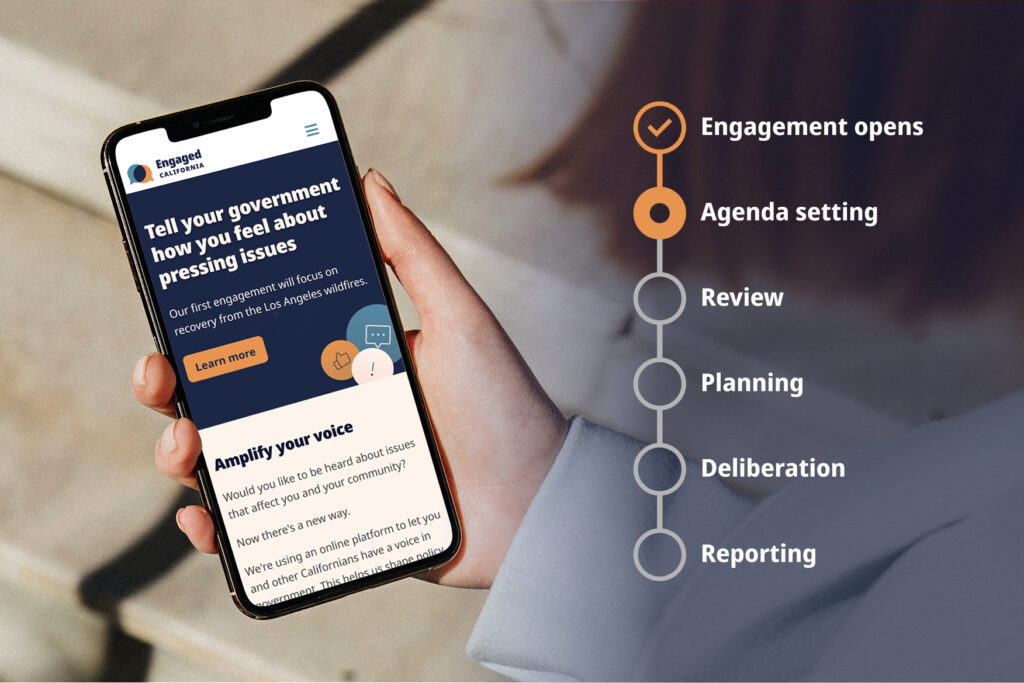
Photo from the California Office of Data and Innovation
Over six months, from March to August 2025, more than 3,000 residents affected by the fires were invited to join the Engaged California platform. Together, they left over 2,500 comments on steps they hoped to see the government take. They successfully narrowed the conversation to 19 policy actions, ranking five as the most urgent. Although Altadena and the Palisades differ sharply in demographics and income, residents of both landed on remarkably similar priorities.
The residents agreed to focus on the core challenges surrounding utilities, water, communications, financial support, and permitting. On utilities, residents asked the state to bury power lines wherever possible and to reduce the risk of ignition from equipment failure. On water, they wanted systems upgraded to modern fire-flow standards, with more hydrants added in every neighborhood. Other areas with significant demand for change spanned emergency communications, permitting policies, financial support, and more.
Notably, the list is practical, not ideological. As the product of conversations between people who watched hydrants run dry and cell service drop, and who then spent months in permit queues, it offers tangible fixes with the potential to have a meaningful impact on the prospects for recovery.
But turning demands into actions is tougher. The state’s November 2025 report paired each priority with government action, such as relocating electrical infrastructure underground in the City and County of Los Angeles, $3 billion in federal assistance and loans, over $100 million in mortgage relief, fee waivers, and permit reviews fast-tracked to 30 days. However, because much of that was already in process before the deliberation ended, establishing the causal effects of Engaged California is challenging.
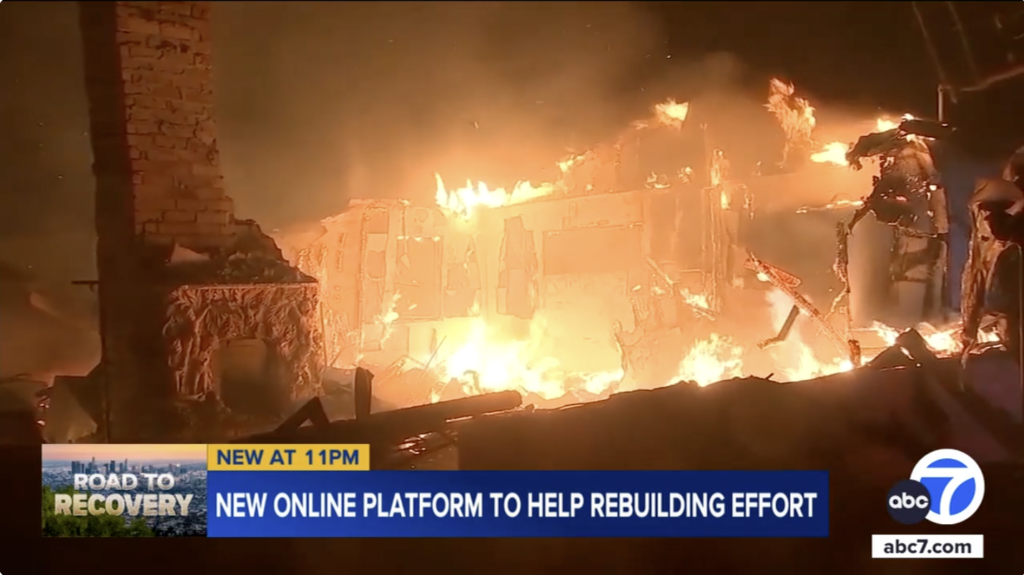
Photo from Los Angeles ABC7
The biggest obstacle to the program’s success, ODI Communications Director Barbara Cosio Moreno says, is not the underlying technology or turnout, but public trust. “They think we want something,” she says of residents skeptical of the small-group discussions. Residents are wary the process is a marketing exercise or political theater. Overcoming that assumption requires rebuilding trust with residents and demonstrating, slowly and deliberately, that citizen participation actually changes outcomes, she says. When decisions are made quickly in a crisis, it is difficult for residents to see which decisions their input moved.
Citizen assemblies, traditionally composed of representative small groups of randomly selected residents who discuss and potentially propose laws, are oftentimes small by design, which limits how many people can take part.1 Engaged California uses modern technologies to enable deliberation at scale.
The wildfire pilot relied on residents to opt in, post their suggestions and thoughts on an online platform, and engage with each other, allowing ODI data scientists to then analyze thousands of comments and extract specific and targeted insights. Since then, the process has evolved beyond comment boxes alone and now convenes small discussion groups over Zoom. Participants are selected to approximate California’s demographic makeup, and staff use AI tools to synthesize themes across thousands of comments and hours of concurrent discussion.
Since the LA wildfires, Engaged California has run trainings and deliberations on a range of other topics, from AI in the workforce to state government efficiency, and it continues to experiment with new ways to get more Californians involved.
Assembly Bill 2103, introduced by Assemblymember Jacqui Irwin in February 2026, formally established the Engaged California Program within ODI. The law requires the office to maintain the deliberation platform and set procedures for selecting topics, including by allowing state legislative leaders to place subjects up for deliberation by the public. It passed the Assembly 72-0, cleared the Senate over the summer, and was signed by Governor Newsom on September 19, 2026, as a part of a democratic reform package.
An important caveat is that the law does not guarantee state funding. Engaged California relies on whatever the legislature appropriates and supplemental funding from partner organizations, which are barred from shaping topics or participating in the deliberation. The law does not require legislators or agencies to respond to the input. Nonetheless, the law is a critical first step, institutionalizing the structure designed to channel public input into the policymaking process. Now, it’s up to policymakers to continue to use it.
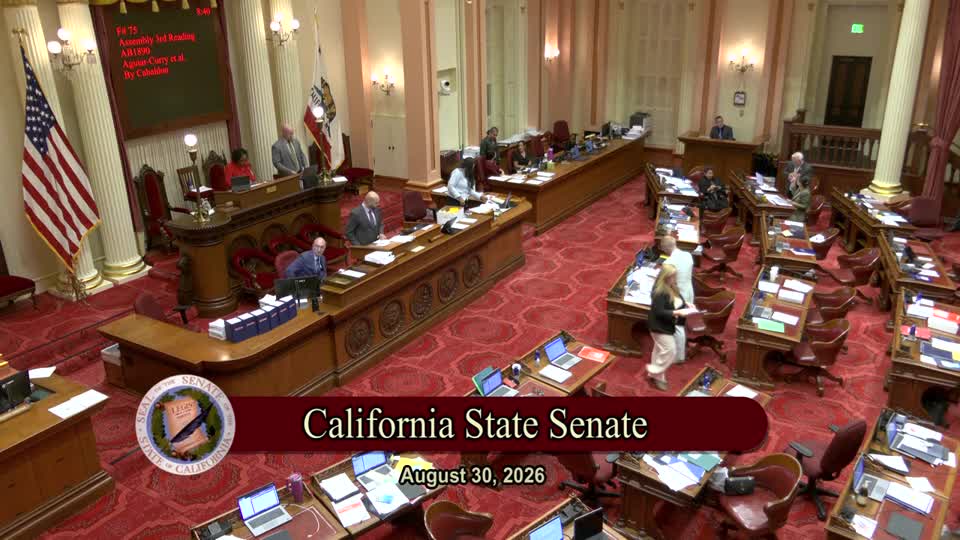
Photo from CalMatters
The program is still young, and the conditions that made it possible may be difficult for many states to reproduce. California had some key advantages:
None of these advantages are impossible for other states to replicate, and none necessarily guarantees success. Other states around the country are experimenting with their own ways to bring residents into policymaking. In Connecticut, a citizens’ assembly of 100 randomly selected residents met through the summer and fall of 2026 to deliberate on property taxes, and State Comptroller Sean Scanlon will present its recommendations at a hearing in the state legislature. In Utah, the Solutions Forum brought together 40 randomly selected residents in September 2026 to develop policy proposals on what role the public should have in decisions about AI. The Nevada Forum invites residents across the state to share their priorities online, aggregating thousands of responses to find common ground and turn it into legislative action.
What sets Engaged California apart is that the state itself runs the program, and now it is written into law.
Civic voice in America is broken in ways many residents can feel. Few vote in local elections, fewer attend public meetings, and many doubt anyone is listening when they speak out. Engaged California aims to address a key source of that frustration: the government’s inability to adequately collect and process public input. It does so by pairing an old democratic practice, residents deliberating in small groups, with digital tools that let the state hear from thousands of them at once. The LA fires showed that residents will show up and do serious work when the stakes are real, and AB 2103 now makes that work a standing part of how California governs, rather than a one-time response to a crisis.
It is still too early to measure how much the program has moved the needle, and Cosio Moreno’s challenge remains: residents need to see that their participation changes outcomes. But for any state trying to rebuild civic voice in a lasting way, Engaged California is one of the best examples we have.
Additional Resource
In a recent guest essay for The New York Times, Allen Lab Democracy Stack Fellow Beth Noveck argues for putting A.I. behind every public servant.

Media Release

Open Access Resource
With a majority of municipalities publishing their budgets as PDFs, Open Book offers a free alternative that towns own and run themselves.
Additional Resource
In a recent guest essay for The New York Times, Allen Lab Democracy Stack Fellow Beth Noveck argues for putting A.I. behind every public servant.
Media Release

Additional Resource
As public officials increasingly turn to digital tools, this guide helps Massachusetts municipal leaders navigate Open Meeting Law and their everyday digital practice while safeguarding transparency.