At one time, Election Day in the United States was a predictable event, managed quietly by local officials. Today, that baseline has shifted amid intense political polarization, viral conspiracy theories, and unprecedented threats against election workers. As a result, the seemingly straightforward act of casting and counting ballots has become a complex security operation, necessitating new partnerships between election officials and law enforcement to protect voters, election workers, and ballot integrity without disrupting the voting process.
This shift served as the focus of “Law Enforcement and Election Officials: Building Partnerships to Protect Elections,” an October 5, 2026, webinar hosted as part of the Ash Center’s Democracy 250 series at Harvard Kennedy School. Co-sponsored by the Program in Criminal Justice Policy and Management at the Malcolm Wiener Center for Social Policy, the event built on the Ash Center report, “The Necessary and Valuable Partnership: Law Enforcement and Election Officials.”
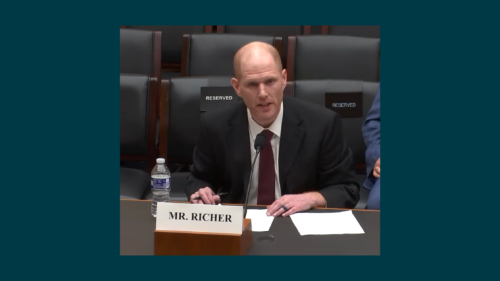
Moderated by Christine M. Cole, safety and justice policy advisor and Ash Center fellow, the panel featured Jason P. Armstrong, retired police chief and CEO of Armstrong Consulting; Shenna Bellows, Secretary of State of Maine; and Al Schmidt, Secretary of the Commonwealth of Pennsylvania.
Opening the discussion, Cole framed the current challenge, stating, “In an increasingly polarized political environment and in the wake of the election since 2020, election officials and law enforcement have been forging partnerships in new ways. … How has this rhetoric changed the way election officials and law enforcement approach their work?”
Reflecting on his career, Armstrong recalled that election duty used to be “a boring day,” requiring little advanced preparation. However, following the 2020 election and the January 6 insurrection, protocols changed entirely. “Before the insurrection, I don’t think I had ever heard of or been a part of any election planning meeting,” Armstrong said. “After the insurrection, every year there was an election meeting that law enforcement was a part of.”
Despite these increased security demands, the panelists emphasized that the fundamental mechanics of voting remain unchanged. Schmidt noted that basic logistical concerns, like paper supply and equipment accuracy, remain critical because any operational failure can be weaponized to undermine voter confidence. However, he pointed out that decentralized administrative structures protect against widespread interference. “…there’s a sort of inefficiency and frustration that comes along with the decentralized system. But there’s also a built-in security with that because heaven forbid any small aspect of that is compromised or disrupted. It is isolated to that one location because our systems are not connected to the internet.”
Bellows agreed, reassuring voters that “the mechanics of the election are tried and true.” Pointing to paper ballots, rigorous testing, and post-election audits, she added, “time after time, I’ll have someone come in with a conspiracy theory and leave being like, ‘Wow, that was really boring.’”
To address increasing worker harassment and “swatting” hoaxes, states are implementing proactive safeguards. In Maine, where Bellows herself was swatted in 2024, the legislature passed a law criminalizing threats against election workers and mandated annual law enforcement training. In Pennsylvania, the Shapiro administration established a dedicated election threat task force and conducts regular tabletop simulations with local partners. Schmidt explained that these exercises help build “a muscle memory so there’s no delay in acting” during a crisis.
Effective coordination also requires clear communication regarding roles. Law enforcement officers must understand state-specific election laws and recognize that election officials retain authority inside polling places. Armstrong noted that agencies work to avoid an overbearing presence that could intimidate voters or be weaponized to suppress turnout. “We’re making sure that everything that we’re doing is in support of the process, is in support of election safety and security,” he explained.
Addressing audience concerns about potential federal interference during the Q&A, the panelists emphasized that federal law strictly prohibits interference. Armstrong added, “The number one thing that anyone can do … if federal agents or federal officials show up is documentation.”
While polarization and high turnover present ongoing challenges for election staff, the panel concluded with an emphasis on civic participation. Cole urged, “You can be in the voting space as a formal observer. But also, if you’re going to be … an observer, you might as well sign up to work because these guys need all the help they can get.” Bellows concluded, “Democracy is a team sport. We will have free, safe, and secure elections in 2026 because we collectively will make it so.”
Dana Guterman is a content strategist, writer, and editor with the Ash Center for Democratic Governance and Innovation.