


Renovating constitutional democracy for the 21st century
The Allen Lab for Democracy Renovation is an impact lab at Harvard Kennedy School working to renovate constitutional democracy for today’s large, complex, digitally powered society so that it delivers on its purpose: human flourishing.
Our work starts from two premises. First, democracy should not be treated as a stand-alone policy domain, but as a standard shaping how public policy is designed and evaluated. Second, democratic institutions and civic culture are mutually reinforcing. When institutions are unresponsive, people disengage; as participation and civic connection weaken, institutions become less responsive still. Realizing the promise of self-government requires reversing this cycle by strengthening both together.
Grounded in Danielle Allen’s field-defining scholarship on democracy, power-sharing liberalism, civic education, and technology, we combine research and real-world application to develop, test, and spread new frameworks and standards for democracy renovation.
Develop and analyze new policy approaches; help establish democracy as a central consideration in emerging debates over AI and political economy through first-of-their-kind frameworks, research, and convenings; and equip future leaders to put democratic outcomes at the center of policymaking. Convened hundreds of leading economists, political scientists, journalists, writers and thinkers from across the political spectrum to explore and debate emerging visions for the future of the political economy.
Provide students and emerging leaders with the tools to strengthen democracy; supporting Fellows producing influential books, original research, and civic initiatives, including former White House Senior Policy Advisor Ami Fields-Meyer’s On Courage, Professor Allison Stanger’s congressional testimony on democracy and Big Tech, and former AmeriCorps Director Sonali Nijhawan’s work connecting service alumni to sustain civic participation and leadership beyond service.
Produced the first Massachusetts statewide landscape analysis, building the OpenBook municipal budget transparency tool, and developing policy recommendations for digital civic infrastructure, including Open Meeting Law in the age of AI.
Advancing a national vision for universal civic learning across the lifespan, building a network connecting K–12, higher education, and adult civic learning, and advancing the policies needed to support lifelong civic learning.
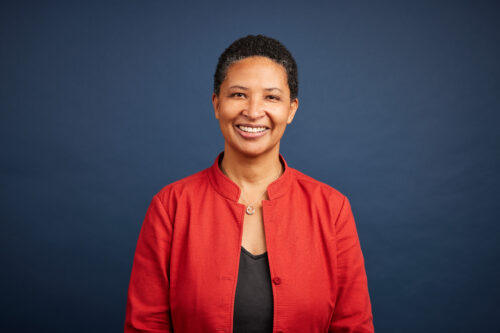
Professor of Public Policy, James Bryant Conant University Professor

PhD, Senior Lab Director

Associate Director for Technology & Democracy

Coordinator, Allen Lab for Democracy Renovation

Lab Affiliate; Assoc. Professor, UCSF Law School

Non-resident Policy Fellow, AY2026-2027

Doctoral Student, Harvard Government Department
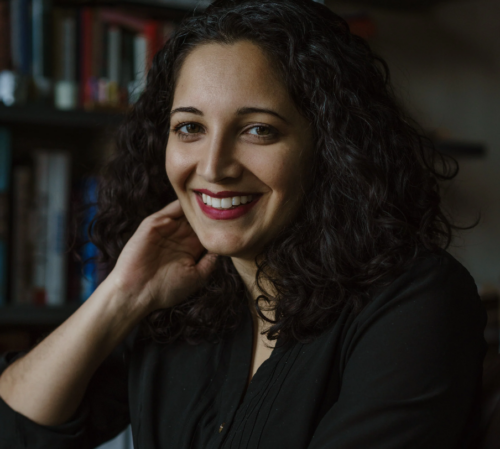
Policy Fellow, AY2026-2027

Founder and Chief Executive Officer, DemNext

Research Fellow, AY2025-2026

Researcher, Harvard College

Policy Fellow, AY2026-2027

Research Fellow, AY2026-2027
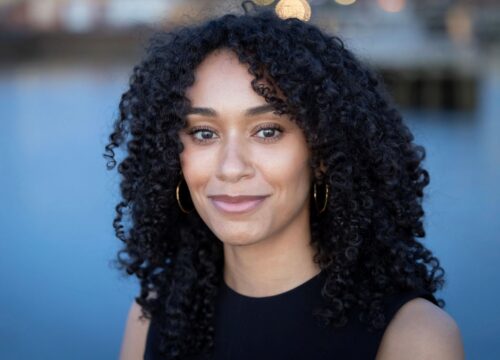
Assistant Professor, College of William and Mary

Research Fellow, AY2026-2027
Harvard College
Policy Fellow, AY2026-2027

Policy Fellow, AY2026-2027

Policy Fellow, AY2025-2026
Researcher, Harvard College

Policy Fellow, AY2026-2027

Policy Fellow, AY2026-2027

Chief Assessment Scientist, Edmond & Lily Safra Center for Ethics
Researcher;
Doctoral Student, Harvard Government Department

Policy Fellow, AY2025-2026

Policy Fellow, AY2025-2026

Policy Fellow, AY2026-2027
Chief Program Officer, EdRedesign Lab
Policy Fellow, AY2026-2027

Research Fellow, AY2025-2026
Researcher, Harvard College

Policy Fellow, AY2026-2027

Berkman Klein Center Fellow

Researcher, Harvard Kennedy School
Non-resident Policy Fellow, AY2025-2026

Researcher, Harvard College

Researcher, Princeton University

Harvard College

Researcher, Harvard College
Researcher, Harvard College

Researcher, Harvard College

Researcher, Harvard College

Doctoral Student, Harvard Government Department

Non-resident Policy Fellow, AY2025-2026

Researcher, Harvard College
Researcher, Harvard College

Principal Investigator;
Post-Doctoral Fellow, Columbia University

Researcher, Harvard College

Policy Fellow, AY2025-2026

Researcher, Harvard Kennedy School

Professor, Santa Fe Institute
Researcher, Harvard College

Researcher, Harvard College

Lab Affiliate; Executive Director, Berkman Klein Center

Researcher, Harvard Law School

Researcher, Harvard College

Researcher;
Master in Urban Planning Candidate, Harvard Graduate School of Design

Doctoral Student, Harvard Government Department
Researcher, Harvard College

Senior Fellow, Allen Lab for Democracy Renovation;
Co-Director and Co-Investigator, GETTING-Plurality Research Network
Feb. 2024-Jan. 2026

PhD; Fulbright Alumnus

EthicAI and Former Visiting Fellow, Allen Lab for Democracy Renovation

Allen Lab Policy Fellow AY 2023-2025

Policy Fellow, AY2025-2026
Communications, Harvard College

Commentary
Allen Lab Senior Fellow, Allison Stanger, and Jaron Lanier outline a world without Section 230.
Additional Resource
“The Real Dangers of Generative AI” by Danielle Allen and Glen Weyl was featured in the January 2024 Journal of Democracy.
Abstract: As perhaps the most consequential technology of our time, Generative Foundation Models (GFMs) present unprecedented challenges for democratic institutions. By allowing deception and de-contextualized information sharing at a previously unimaginable scale and pace, GFMs could undermine the foundations of democracy. At the same time, the investment scale required to develop the models and the race dynamics around that development threaten to enable concentrations of democratically unaccountable power (both public and private). This essay examines the twin threats of collapse and singularity occasioned by the rise of GFMs.
Occasional Paper
Video
The “Advancements in Global AI Policy” webinar featured the following speakers and topics:
Video
“Regulating Web3: Global Trends and Challenges” webinar session featured the following speakers and topics:
Additional Resource
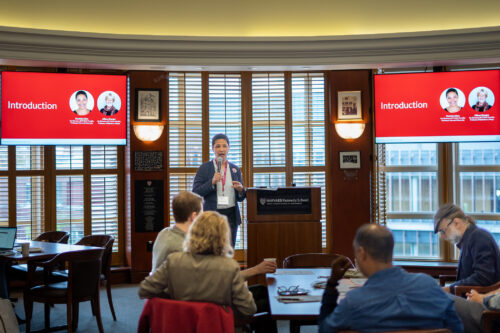
On November 7, 2023, the Summit on AI and Democracy gathered experts across multiple institutions to discuss ongoing research, policy, and development efforts related to the recent advancements in artificial intelligence.
Additional Resource
“Reimagining Democracy for AI” by Aviv Ovadya was featured in the October 2023 Journal of Democracy.
Abstract: AI advances are shattering assumptions that both our democracies and our international order rely on. Reinventing our “democratic infrastructure” is thus critically necessary—and the author argues that it is also possible. Four interconnected and accelerating democratic paradigm shifts illustrate the potential: representative deliberations, AI augmentation, democracy-as-a-service, and platform democracy. Such innovations provide a viable path toward not just reimagining traditional democracies but enabling the transnational and even global democratic processes critical for addressing the broader challenges posed by destabilizing AI advances—including those relating to AI alignment and global agreements. We can and must rapidly invest in such democratic innovation if we are to ensure that our democratic capacity increases with our power.
Video
“The Dark Side of AI: Crime and Adversarial Use Cases” webinar session featured the following speakers and topics:
Video
The “Introduction to AI and Public Policy” webinar session featured the following speakers and topics:

Article
This working paper aims to articulate an interdisciplinary research and practice area focused around bridging systems.

Policy Brief
The GETTING-Plurality Research Network submitted a series of memos which respond to various questions posed around the topics of bolstering democracy and civic participation; protecting rights, safety, and national security; and promoting economic growth and good jobs.
Video
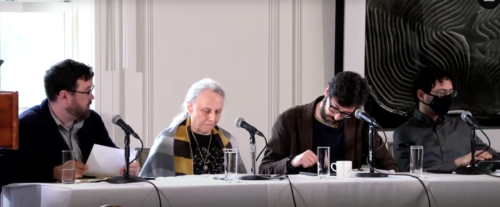
GETTING-Plurality Workstream Lead Aviv Ovadya recently discussed his work on bridging systems as part of “Optimizing for What? Algorithmic Amplification and Society.” This two-day symposium at Columbia University’s Knight First Amendment Institute explored algorithmic amplification and distortion as well as potential interventions.
Commentary
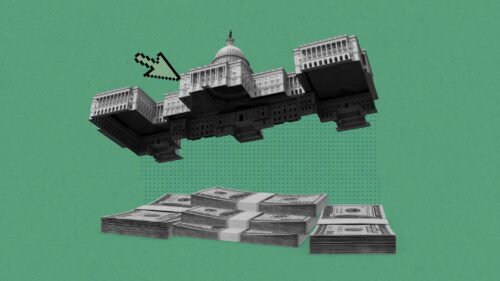
ChatGPT and other AIs could supercharge the influence of lobbyists—but only if we let them.

Commentary
When is it time to start worrying about artificial intelligence interfering in our democracy? Maybe when an AI writes a letter to The New York Times opposing the regulation of its own technology.
Digital humanism highlights the complex relationships between people, society, nature, and machines. It has been embraced by a growing community of individuals and groups who are setting directions that may change current paradigms. Here we focus on the initiatives generated by the Vienna Manifesto.