The Allen Lab for Democracy Renovation’s Technology and Democracy workstream aims to ensure that emerging technologies are developed and governed in support of the public benefit.
The Allen Lab for Democracy Renovation’s Technology and Democracy workstream is focused on developing democracy-supportive technology policies, harnessing the opportunities for emerging technologies to improve governance, fostering professional norms that lead to technology development supportive of human pluralism, and building a robust pipeline of experts who can bridge ethical and technical considerations within policy and industry spaces. We pursue this work through foundational analysis and theory, field-building, and policy development.
The Landscape of Digital Civic Infrastructure in Massachusetts
Allen Lab for Democracy Renovation authors offer the first comprehensive analysis of how Massachusetts municipalities are using technology to support civic engagement, government decision-making, and public service delivery.
Crocodile tears: Can the ethical-moral intelligence of AI models be trusted?
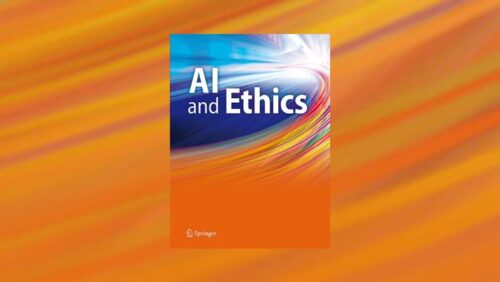
Allen Lab authors Sarah Hubbard, David Kidd, and Andrei Stupu introduce an ethical-moral intelligence framework for evaluating AI models across dimensions of moral expertise, sensitivity, coherence, and transparency in their recently published paper, Crocodile Tears: Can the Ethical-Moral Intelligence of AI Models Be Trusted? in Springer AI & Ethics.
Earlier this year, the Allen Lab for Democracy Renovation hosted a convening on the Political Economy of AI. This collection of essays from leading scholars and experts raise critical questions surrounding power, governance, and democracy as they consider how technology can better serve the public interest.
This policy primer from the Allen Lab for Democracy Renovation is intended to introduce the ideas and conversations around how public AI alternatives could foster an ecosystem that prioritizes the public interest while offering a counterbalance to corporate concentration.
This policy primer from the Allen Lab for Democracy Renovation is intended to introduce the ideas and conversations around reform of Section 230 of the Communications Decency Act and how it could remake the social media ecosystem.
A Roadmap for Governing AI: Technology Governance and Power-Sharing Liberalism
This paper aims to provide a roadmap for governing AI. In contrast to the reigning paradigms, we argue that AI governance should be not merely a reactive, punitive, status-quo-defending enterprise, but rather the expression of an expansive, proactive vision for technology—to advance human flourishing.
GETTING-Plurality Research Network
At the center of our work is our multidisciplinary research network. The Governance of Emerging Technology and Tech Innovations for Next-Gen Governance (GETTING-Plurality) is a research network linking philosophers, social scientists, computer scientists, legal scholars, and technologists. This unique collaborative unites tech ethics initiatives at Harvard University with external impact partners across higher education and the tech industry, bringing philosophers and ethicists to the table for every project.
Our network seeks to advance understanding of how to shape, guide, govern, and deploy technological development in support of democracy, collective intelligence, and other public goods. Our focus is on how to do so, given the plural nature of human intelligence. We connect theory with practice to ensure that academic insights inform real-world policy and industry standards.
Democracy’s Tripwire: Global Corruption and Whistleblowing in Europe and the U.S.
This paper compares whistleblower protection politics in Europe and the United States to bring into fuller relief the vital role insider truth-telling plays in combatting global corruption, keeping elites honest, and sustaining liberal democracy.