


Renovating constitutional democracy for the 21st century
The Allen Lab for Democracy Renovation is an impact lab at Harvard Kennedy School working to renovate constitutional democracy for today’s large, complex, digitally powered society so that it delivers on its purpose: human flourishing.
Our work starts from two premises. First, democracy should not be treated as a stand-alone policy domain, but as a standard shaping how public policy is designed and evaluated. Second, democratic institutions and civic culture are mutually reinforcing. When institutions are unresponsive, people disengage; as participation and civic connection weaken, institutions become less responsive still. Realizing the promise of self-government requires reversing this cycle by strengthening both together.
Grounded in Danielle Allen’s field-defining scholarship on democracy, power-sharing liberalism, civic education, and technology, we combine research and real-world application to develop, test, and spread new frameworks and standards for democracy renovation.
Develop and analyze new policy approaches; help establish democracy as a central consideration in emerging debates over AI and political economy through first-of-their-kind frameworks, research, and convenings; and equip future leaders to put democratic outcomes at the center of policymaking. Convened hundreds of leading economists, political scientists, journalists, writers and thinkers from across the political spectrum to explore and debate emerging visions for the future of the political economy.
Provide students and emerging leaders with the tools to strengthen democracy; supporting Fellows producing influential books, original research, and civic initiatives, including former White House Senior Policy Advisor Ami Fields-Meyer’s On Courage, Professor Allison Stanger’s congressional testimony on democracy and Big Tech, and former AmeriCorps Director Sonali Nijhawan’s work connecting service alumni to sustain civic participation and leadership beyond service.
Produced the first Massachusetts statewide landscape analysis, building the OpenBook municipal budget transparency tool, and developing policy recommendations for digital civic infrastructure, including Open Meeting Law in the age of AI.
Advancing a national vision for universal civic learning across the lifespan, building a network connecting K–12, higher education, and adult civic learning, and advancing the policies needed to support lifelong civic learning.
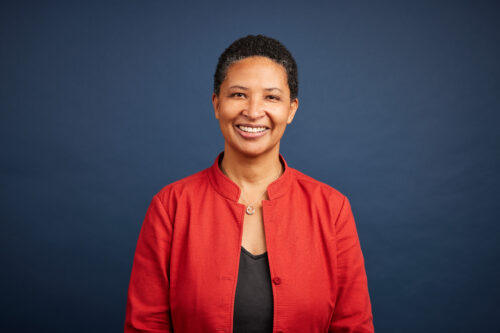
Professor of Public Policy, James Bryant Conant University Professor
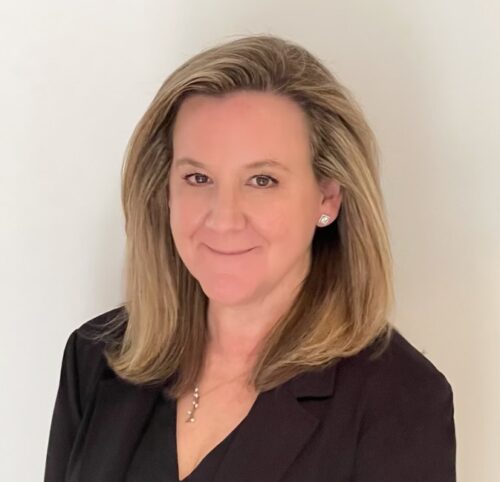
PhD, Senior Lab Director

Associate Director for Technology & Democracy
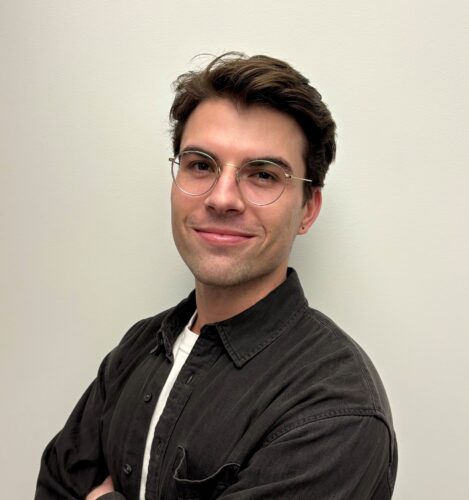
Coordinator, Allen Lab for Democracy Renovation
Lab Affiliate; Assoc. Professor, UCSF Law School
Non-resident Policy Fellow, AY2026-2027

Doctoral Student, Harvard Government Department
Policy Fellow, AY2026-2027

Founder and Chief Executive Officer, DemNext

Research Fellow, AY2025-2026

Researcher, Harvard College

Policy Fellow, AY2026-2027

Research Fellow, AY2026-2027
Assistant Professor, College of William and Mary
Research Fellow, AY2026-2027
Harvard College
Policy Fellow, AY2026-2027

Policy Fellow, AY2026-2027

Policy Fellow, AY2025-2026
Researcher, Harvard College

Policy Fellow, AY2026-2027
Policy Fellow, AY2026-2027

Chief Assessment Scientist, Edmond & Lily Safra Center for Ethics
Researcher;
Doctoral Student, Harvard Government Department

Policy Fellow, AY2025-2026

Policy Fellow, AY2025-2026

Policy Fellow, AY2026-2027
Chief Program Officer, EdRedesign Lab
Policy Fellow, AY2026-2027
Research Fellow, AY2025-2026
Researcher, Harvard College

Policy Fellow, AY2026-2027
Berkman Klein Center Fellow

Researcher, Harvard Kennedy School
Non-resident Policy Fellow, AY2025-2026
Researcher, Harvard College
Researcher, Princeton University

Harvard College
Researcher, Harvard College
Researcher, Harvard College

Researcher, Harvard College
Researcher, Harvard College

Doctoral Student, Harvard Government Department
Non-resident Policy Fellow, AY2025-2026
Researcher, Harvard College
Researcher, Harvard College
Principal Investigator;
Post-Doctoral Fellow, Columbia University
Researcher, Harvard College

Policy Fellow, AY2025-2026

Researcher, Harvard Kennedy School

Professor, Santa Fe Institute
Researcher, Harvard College

Researcher, Harvard College
Lab Affiliate; Executive Director, Berkman Klein Center

Researcher, Harvard Law School

Researcher, Harvard College

Researcher;
Master in Urban Planning Candidate, Harvard Graduate School of Design

Doctoral Student, Harvard Government Department
Researcher, Harvard College

Senior Fellow, Allen Lab for Democracy Renovation;
Co-Director and Co-Investigator, GETTING-Plurality Research Network
Feb. 2024-Jan. 2026

PhD; Fulbright Alumnus
EthicAI and Former Visiting Fellow, Allen Lab for Democracy Renovation

Allen Lab Policy Fellow AY 2023-2025

Policy Fellow, AY2025-2026
Communications, Harvard College
Commentary
“… for all the consternation over the potential for humans to be replaced by machines in formats like poetry and sitcom scripts, a far greater threat looms: artificial intelligence replacing humans in the democratic processes — not through voting, but through lobbying.”
This Article reviews the anti-money laundering and counter-financing of terrorism (AML/CFT) framework and its application to cryptocurrencies. Then, it presents case studies demonstrating the important contributions that the AML/CFT toolkit has made to countries’ security.
The authors propose an alternate approach to mainstream AI practice that broadens the focus beyond algorithms viewed in isolation to processes of human-algorithm collaboration.
Podcast
Attempting to balance the challenging trade-offs between individual rights and our obligations to one another.
An interview with Allison Stanger
Web3 today centers around expressing transferable, financialized assets, rather than encoding social relationships of trust.

Policy Brief
Researchers and funders should redirect focus from centralized autonomous general intelligence to a plurality of established and emerging approaches that extend cooperative and augmentative traditions as seen in successes such as Taiwan’s digital democracy project to collective intelligence platforms like Wikipedia.
Facebook, YouTube, and other platforms make incredibly impactful decisions about the speech of billions. Right now, those decisions are primarily in the hands of corporate CEO’s—and heavily influenced by pressure from partisan and authoritarian governments aiming to entrench their own power.
Aviv Ovadya proposes an alternative: platform democracy.

Alison Stanger argues that the real threat to liberal democracies is not capitalism, but the growing inequalities that corporate surveillance in its unfettered form both reveals and exacerbates.
When AI is seen as a source of truth and scientific knowledge, it may lend public legitimacy to harmful ideas about identity.
This paper compares whistleblower protection politics in Europe and the United States to bring into fuller relief the vital role insider truth-telling plays in combatting global corruption, keeping elites honest, and sustaining liberal democracy.