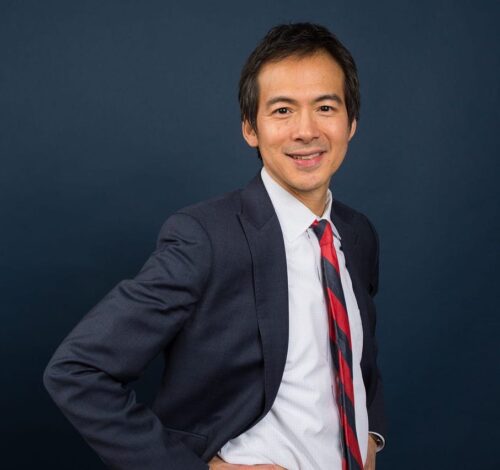
Archon Fung
Director, Ash Center for Democratic Governance and Innovation;
Co-Director of the Program on Democracy and the Informed Public;
Winthrop Laflin McCormack Professor of Citizenship and Self-Government

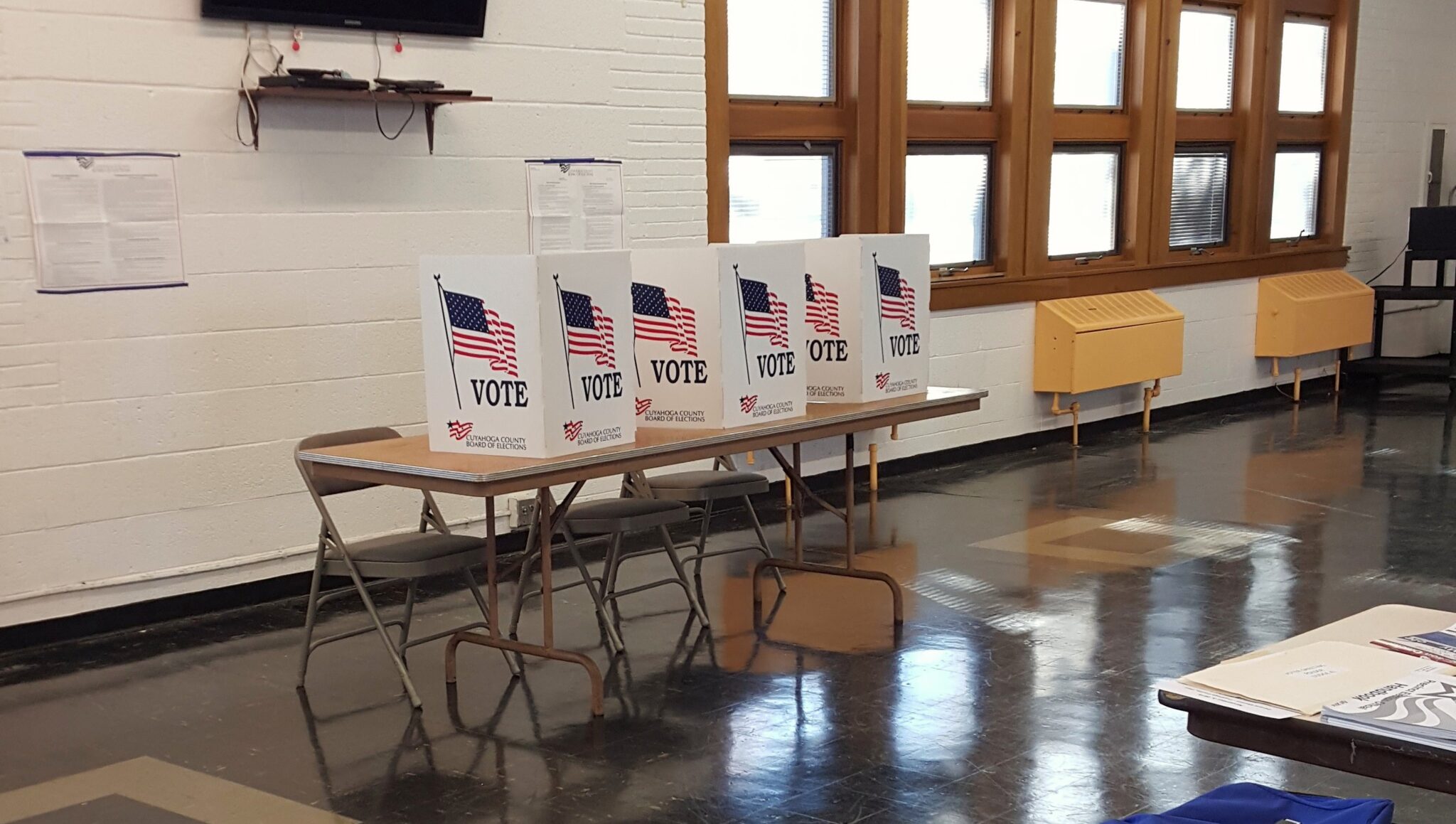
Reimagining our political institutions to meet the democratic challenges of today.
Institutional Reforms, Electoral College, Civic Engagement, Multiracial Democracy, Sports, Democracy and Civic Health
Democracy requires deep and structural changes to survive and grow. The Ash Center’s Reimagining Democracy Program provides scholars and those on the frontlines of our democracy with a space for generating ambitious ideas and practices to make democracy more resilient, responsive, and inclusive.
Director, Ash Center for Democratic Governance and Innovation;
Co-Director of the Program on Democracy and the Informed Public;
Winthrop Laflin McCormack Professor of Citizenship and Self-Government
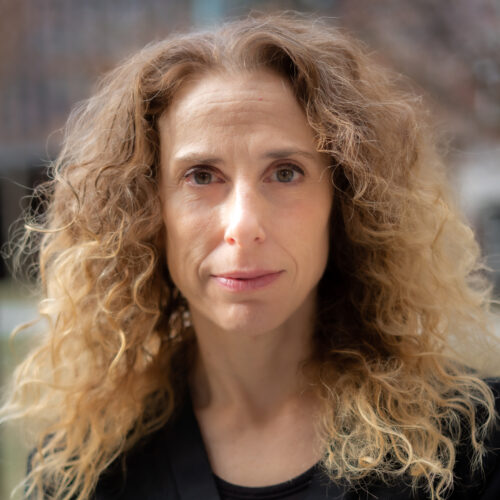
Director of Research Projects in Democratic Practice
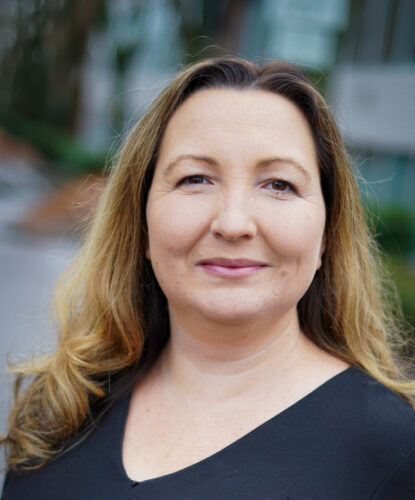
Senior Associate Director, Center-wide Democracy Initiatives

Program Manager

Program Administrator
Program Director

Assistant Director
Video
Harvard Ash Center Senior Practice Fellow in American Democracy Miles Rapoport advocates that universal voting, a requirement that every citizen cast a ballot, could reduce polarization and pave a pathway to a more equitable American democracy.

Feature
Analysis by Harvard Kennedy School’s Pippa Norris and co-author Kseniya Kizilova shows nationalism and desire to protect democratic freedoms motivate Ukrainian citizens to resist Russia’s invasion.
Q+A
To discuss the filibuster and its impact on voting rights and the Senate, we sat down with Archon Fung, Winthrop Laflin McCormack Professor of Citizenship and Democracy at Harvard Kennedy School and the director of the Ash Center for Democratic Governance and Innovation’s Democratic Governance Program.
Video
We are in the midst of one of the most rancorous redistricting sessions in our country’s history. Partisan officials – mostly but not only in conservative legislatures – are using the drawing of new congressional, state and local election districts to amass disproportionate power for themselves. How successfully can this be resisted? Meanwhile, the many independent/nonpartisan commissions established in states in recent years were meant to help avoid this problem. Are they working to do so? If so, which ones are, which ones aren’t, where and why?
Join the Ash Center and Equal Democracy Project at Harvard Law School to learn about the state of redistricting in this moment, litigation that is occurring under a dramatically weakened Voting Rights Act, and how different redistricting commissions are faring, with:
Ben Schneer, Assistant Professor of Public Policy at the Harvard Kennedy School
Mitchell Brown, Counsel, Voting Rights, Southern Coalition for Social Justice
Colleen Mathis, former Chair of the Independent Redistricting Commission of Arizona
Cathy Duvall, Managing Consultant, Fair Representation in Redistricting
Moderated by: Nick Stephanopoulos, Harvard Law School
Feature
George R. Greenidge. Jr. HGSE ‘96, Ash Center Democracy Visiting Fellow, doesn’t draw a line between scholarship and community advocacy, using both to combat gentrification and racial injustice.
Video
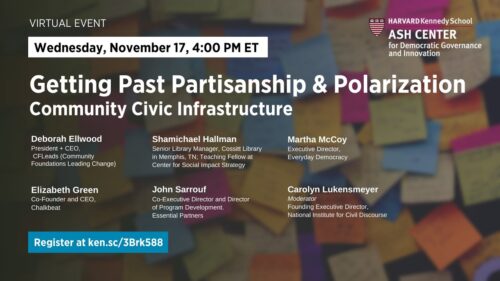
In this panel discussion, community organizers, leaders, and democracy advocates explored examples from communities all over the country where this is working today. Then, they discussed the challenge of replicating and expanding community civic infrastructure initiatives across the country.
Q+A
Requiring citizens to vote, or actively abstain, would increase voter participation and make democracy more representative in the Bay State says Ash Center Senior Practice Fellow in American Democracy.
Video
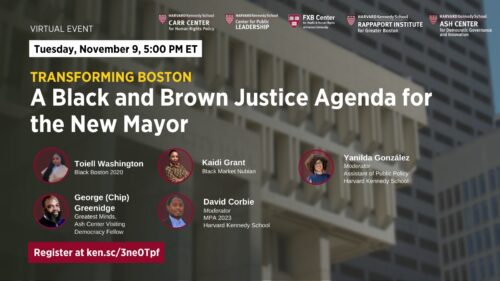
The Ash Center, Carr Center for Human Rights Policy, Center for Public Leadership, FXB Center for Health and Human Rights, and the Rappaport Institute for Greater Boston hosted a conversation on the urgent issues – from education and housing to economic development and communal violence – that the next mayor of Boston must address to rectify structural inequities and support Black and Brown communities.
Video
The U.S. Senate Judiciary Committee issued a major report in October 2021 claiming to show “the American people just how close we came to a constitutional crisis” during the events before and after the January 6 “capitol insurrection.” This crisis was prevented only by “a number of upstanding Americans in the Department of Justice.” “Donald Trump was unable to bend the department to his will. But it was not due to a lack of effort,” the report goes on. But, the Republicans on the Judiciary Committee responded that Trump “did not weaponize DOJ for his personal or campaign purposes” in their own report. Join Harvard Kennedy School historian Alexander Keyssar and Harvard Law School law of democracy scholar Guy Uriel-Charles as they parsed the major revelations in these reports and helped us to understand how these events may foreshadow future crises in American Democracy. Archon Fung, Winthrop Laflin McCormack Professor of Citizenship and Self-Government at Harvard Kennedy School, moderated.
Video
What would it be like to really rethink our Constitution? In this webinar, we learned about participatory constitution building, a way of writing a new constitution with full public participation. Participatory constitution building is common around the world, but how it is designed and the process by which it is undertaken is critical to making it a success anywhere. We learned with experts on participatory constitution building globally, in Chile at this moment, and among tribal governments. What are the practices we might think about as we reconsider the strengths and weaknesses of our own constitution in this country?
Speakers included:
Video
In the nearly one year since the November 2020 elections, the diverging directions state legislatures took on expanding or contracting voting rights created a huge fault line in American democracy, described by some as ‘two Americas’. A Voting Rights Lab tracking report as of September 13, 2021, identified 27 states representing 70 million voters that had passed laws to expand voting opportunities, and 13 states with 55 million people that had passed sharply restrictive legislation. And state legislatures were still at work. What’s causing this divergence?
How are voting rights advocates advancing their work in such disparate political environments? What does it mean for upcoming elections and the future of American democracy? Join the Ash Center as voting advocates from two key states that have gone in opposite directions and policy experts evaluated the trends, discussed the present, and looked into the future.
Speakers include:
Policy Brief
Feature
Two Kennedy School student research projects chart path forward on voter engagement.
Feature
Ash Center Fellow Miles Rapoport helps ignite a public debate on implementing universal voting in the United States

Feature
Board Chair of When We All Vote Valerie Jarret discusses voter engagement at a virtual Harvard Votes Challenge event on National Voter Registration Day